The networking serendipity problem

August 03, 2026

he5VK

Serendipity — the valuable, unexpected connection — doesn't happen in rooms designed for it.It happens in rooms small enough that people actually know each other. Here's why that distinction matters more than most professionals realise.

What serendipity actually requires

The word gets used loosely. In professional contexts it usually means "a useful connection I didn't expect" — a conversation that led somewhere, an introduction that changed a project, a piece of insight that arrived at exactly the right moment from someone who turned out to understand your situation unusually well.

What produces this is almost never a networking event. Networking events are designed for volume — maximum exposure to maximum people in minimum time. They produce business cards, LinkedIn connections, and the vague sense that something useful might eventually emerge from all that contact. Sometimes it does. Mostly it doesn't, and the ratio of effort to outcome is poor.
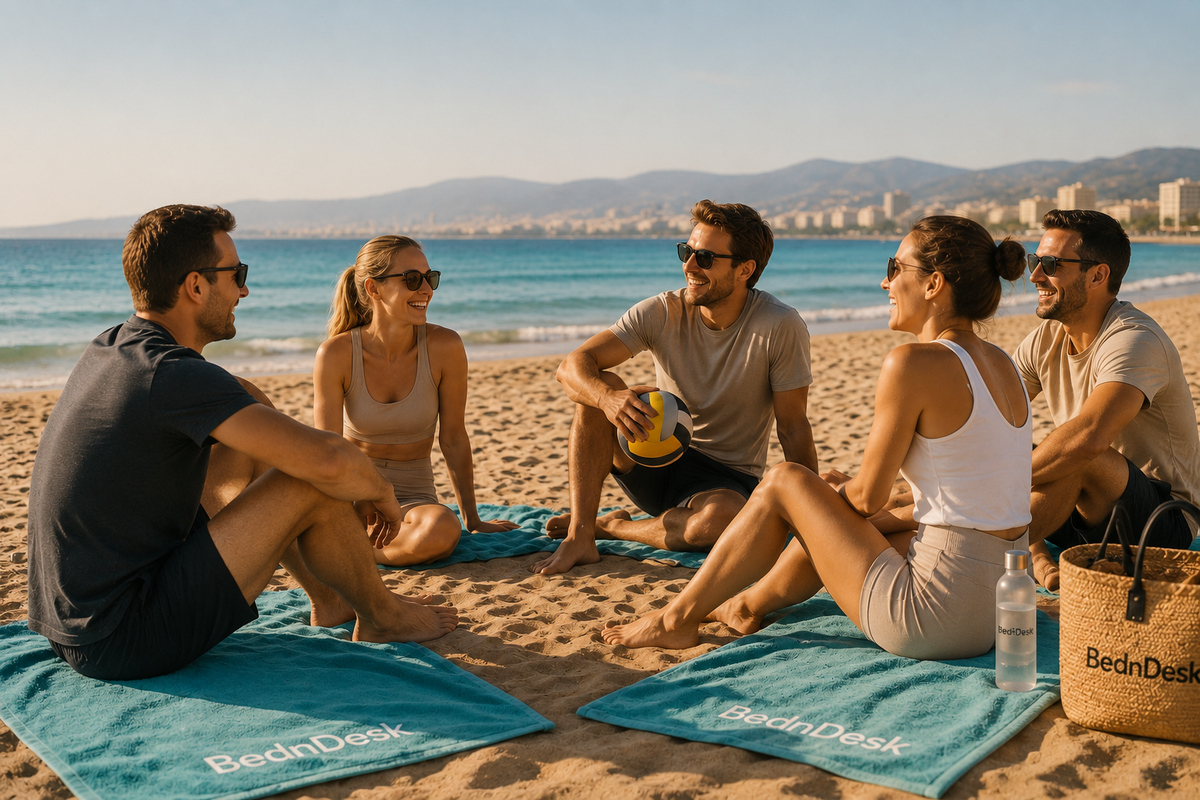
What actually produces serendipity is context and trust. Someone knowing enough about your work to make a relevant observation. Someone you've had three real conversations with mentioning something that clicks because they already understand what you're trying to solve. These things don't happen at speed in large rooms. They happen slowly, in small ones, among people who've had enough time to actually know each other.

"The most valuable professional conversation you'll have this year probably won't happen at a conference. It'll happen over a dinner table with someone who already knows what you're working on."

What this looks like under a total solar eclipse

On 12 August 2026 Mallorca sits inside the path of totality for a sunset total solar eclipse. From Playa de Palma the sun will be only a couple of degrees above the western horizon when the moon covers it completely for roughly a minute and a half. The light will drop, the sky will take on that strange twilight colour, and for a short window the ordinary evening will feel suspended.

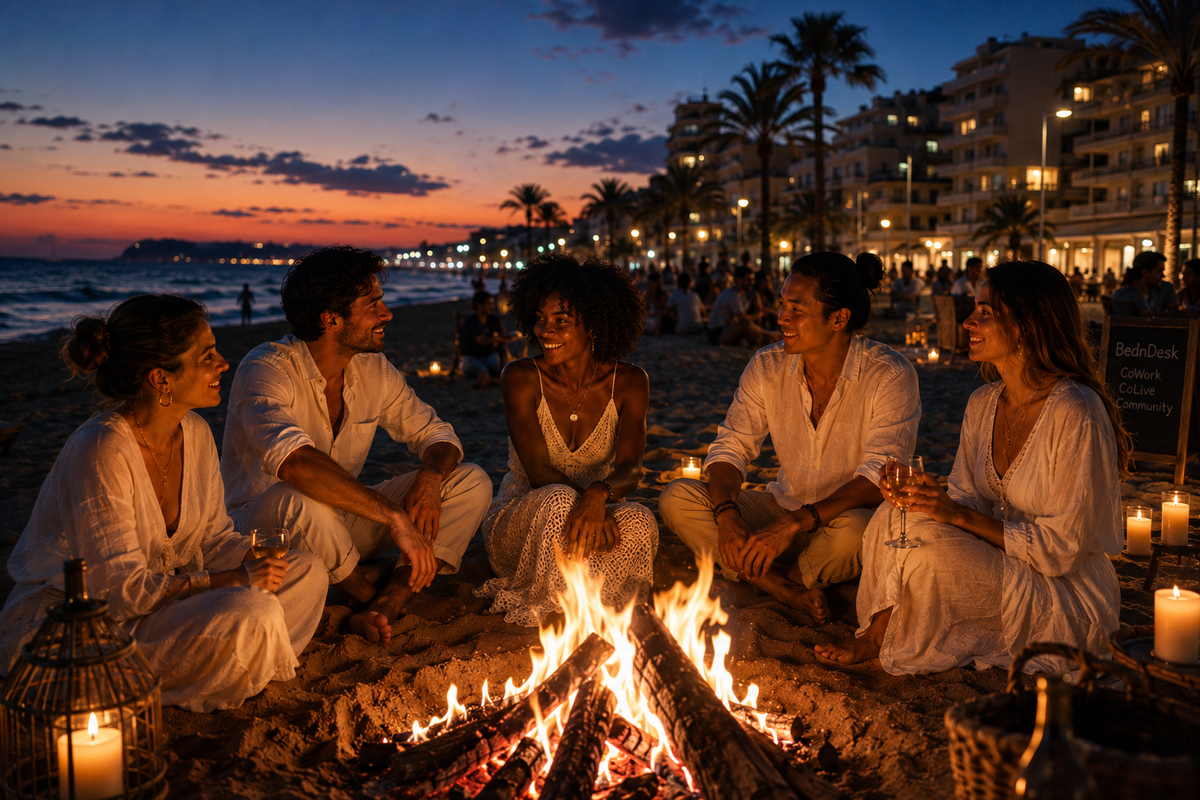
Imagine five people who have already spent a week working side-by-side in the same focused house walking the one-minute path to the sand together. No agenda. No performance. Just the shared, rare experience of the light changing over the Mediterranean. The conversations that start in that quiet darkness — or in the soft residual light on the walk back — are the kind that networking events spend thousands of euros trying (and failing) to manufacture.

The eclipse doesn’t create the serendipity. The small group and the repeated days of context do. The eclipse simply removes every remaining distraction and makes the conditions impossible to ignore.

BednDesk caps at four or five guests by design. Not to create exclusivity — to create the conditions where the conversations that actually matter can happen. The beach a minute away helps too: the walk back from a swim (or from watching the sky darken) is where a lot of the best exchanges tend to occur, when nobody has an agenda and the afternoon — or the strange twilight — is still ahead of them.

Why small groups change the maths

When a space holds four or five people and everyone is there for weeks rather than days, something specific happens to the quality of interaction. The small talk exhausts itself quickly — there aren't enough people to keep recycling it. Conversations move into substance because there's nowhere else for them to go.

By day three you know what everyone is working on, what they're struggling with, what they're good at. By day seven you have a baseline of understanding that turns casual exchanges into something more useful. "I mentioned I was stuck on a pricing decision" becomes a story that ends with "she'd solved exactly that problem six months ago and spent twenty minutes on the beach explaining how." That's serendipity. It's also the product of smallness and time — two things most professional environments are specifically designed to minimise.

The conditions that make it work

Three things produce high-quality serendipity consistently. Repetition — seeing the same people across multiple days and contexts. Psychological safety — an environment where people show up as themselves rather than performing professional personas. And alignment — being around people at a similar stage who are working on similar kinds of problems.

Large environments struggle with all three. High turnover prevents repetition. The social pressure of a big group encourages performance over authenticity. The wide demographic range means most connections are too distant in context to produce relevant insight.

A four-person space where everyone self-selected for focus and intentional living hits all three naturally. The repetition is structural. The psychological safety comes from the small scale. The alignment is what brought everyone there in the first place.

BednDesk caps at four or five guests by design. Not to create exclusivity — to create the conditions where the conversations that actually matter can happen. The beach a minute away helps too: the walk back from a swim is where a lot of the best exchanges tend to occur, when nobody has an agenda and the afternoon is still ahead of them.

What this looks like in 2026 specifically

The professionals who've been doing remote work for long enough have figured out the difference between connections that feel productive and ones that actually are. By 2026, most established solopreneurs and mid-career professionals have quietly stopped optimising for volume in their professional relationships. They've done the large hub, the conference circuit, the active LinkedIn strategy. The returns diminished. The useful relationships turned out to be the small number of people they actually knew.

Micro environments are where that understanding finds its natural expression. Not a rejection of community — a more accurate understanding of what community actually produces versus what it looks like it should produce.

The table only has five seats

BednDesk has coliving stays and day passes available in S'Arenal. Four or five people, one minute from the beach. The current group changes with each stay — the dynamic, at this scale, tends not to.

The most useful professional conversation you have this year might happen over a shared dinner in the Mediterranean. It won't be because anyone planned it that way. It'll be because the table was small enough for everyone to actually show up.